2026-03-30
How to Landscape a New Construction Home in Nocatee, FL (Coastal, HOA-Smart, Tropical-Forward)
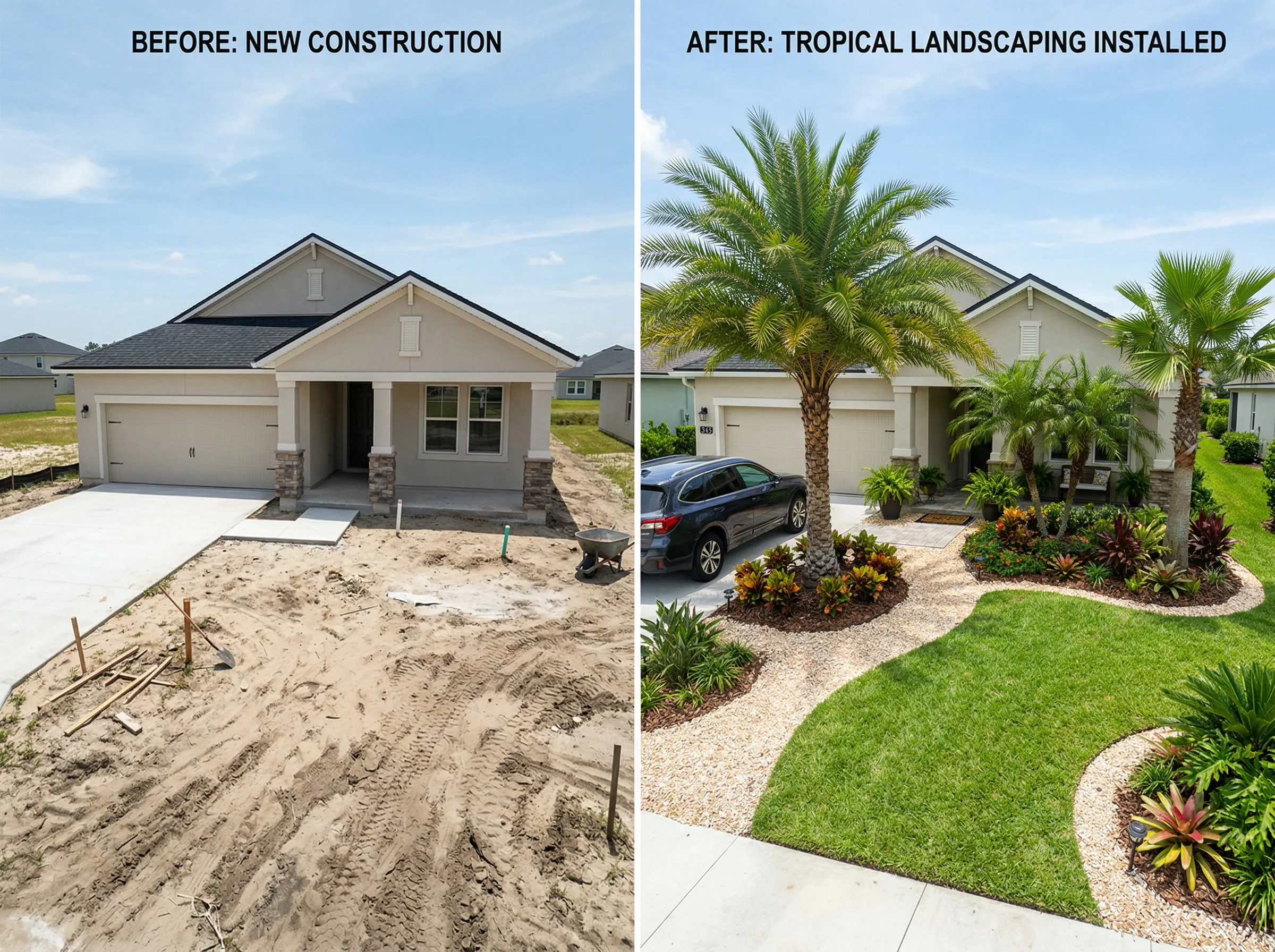
Direct answer: To landscape a new construction home in Nocatee, FL, start by fixing the “builder-grade” basics (grading, drainage, and irrigation), then improve sandy fill soil with organic matter, lay out simple planting zones that match Nocatee HOA/ARB expectations, and install tough, heat-loving plants (palms, clusia, hibiscus, bougainvillea, ferns, and ornamental grasses) with a clean, coastal finish like coquina shell for long-lasting curb appeal.
Why new construction landscaping in Nocatee is different
Nocatee (in Ponte Vedra, St. Johns County) is a master-planned community with a consistent, polished look—wide sidewalks, golf-cart paths, and manicured streetscapes—so a new home can feel “unfinished” until the landscape catches up. Builders typically deliver a functional starter yard: sod, a few foundation shrubs, and basic irrigation. The challenge is that the soil beneath is often compacted, sandy, and disturbed from construction activity. Your goal is to build a landscape that looks established, meets neighborhood standards, and stays resilient through Northeast Florida heat, heavy rain bursts, and occasional cold snaps.
Step 1: Walk the property like a pro (before you buy plants)
Map sun, shade, and reflected heat
Spend a full day noting where the sun hits. In many Nocatee streets (especially newer phases with fewer mature canopy trees), front yards get intense afternoon sun. Pay special attention to the west-facing side of the home and any driveway edges—reflected heat can cook shallow-rooted plants if you don’t plan for it.
Find drainage patterns and low spots
New construction lots can have subtle grading issues: small depressions that hold water, downspouts that dump onto beds, or side-yard swales that move stormwater toward the street or pond. After a heavy rain, walk the yard and note where water sits longer than 24 hours. Fixing drainage early prevents root rot and keeps your sod healthy.
Locate utilities, easements, and irrigation zones
Before you dig, confirm irrigation head locations and zone coverage. Also, identify where cable, irrigation lines, and any neighborhood drainage easements run—especially in backyards that back up to preserves or stormwater features. Plan trees and large shrubs away from utility lines and allow access for maintenance.
Step 2: Build an HOA/ARB-friendly plan (so you don’t have to redo it)
Nocatee neighborhoods often require approval for visible exterior changes, including significant landscaping updates, fences, and hardscape additions. Even if you’re doing it yourself, assume you may need to submit a simple drawing showing the layout, materials, and plant types. A clean, consistent design is more likely to get approved quickly than a piecemeal “plant-as-you-go” approach.
Design principles that match Nocatee’s look
- Simple shapes: Use long, curved beds rather than jagged edges.
- Layering: Tall accents (palms) + mid-height shrubs (clusia, hibiscus) + low texture (muhly grass, ferns).
- Repeat plant groups: Repetition looks intentional and high-end.
- Keep sightlines clear: Don’t block sidewalks, driveways, or corners with oversized shrubs.
Step 3: Fix the “new construction soil” problem
Most new builds in Nocatee sit on sandy soils with low organic matter. That means nutrients wash through quickly and the ground dries out fast. The solution is not “more fertilizer” alone—it’s improving the soil structure where your plants actually live.
How to improve planting beds (without overcomplicating it)
- Loosen compacted areas: In beds, break up compacted soil 8–12 inches deep where possible.
- Add organic matter: Blend compost or quality planting mix into the top layer of bed soil to improve moisture holding and root growth.
- Use mulch or shell consistently: A uniform top layer protects soil from heat and erosion.
Protect the foundation and keep beds off the siding
Keep soil and mulch a few inches below the bottom of siding/weep screed to reduce moisture issues and allow air movement. This also helps reduce pests and staining on the home’s exterior.
Step 4: Plan irrigation for year-one success (then reduce water later)
New plants need consistent moisture while roots establish—especially in sandy ground. But once established, the best Nocatee landscapes are designed to use water efficiently. Start by confirming each zone has head-to-head coverage, no spray on the house, and appropriate nozzle types (spray vs. rotor) for bed vs. turf areas.
Smart watering schedule for the first 90 days
- Weeks 1–2: Water new plantings lightly but frequently to keep root balls evenly moist.
- Weeks 3–6: Transition to deeper watering less often to encourage roots to chase moisture.
- Weeks 7–12: Reduce frequency again, watching plants for stress during hot, windy stretches.
Step 5: Choose plants that look “Nocatee polished” and handle real Florida conditions
To get that resort-style curb appeal, mix structure (evergreen shrubs), tropical texture (palms and ferns), and seasonal color (flowering shrubs). Below are reliable, tropical-forward picks that work well in Northeast Florida landscapes when placed correctly by sun exposure and protected during unusual cold snaps.
Foundation and privacy structure
- Clusia – $21.99 each. Clusia is a go-to for clean, modern hedges and privacy screens.
- Macho Fern – $17.99 each. Great for shaded entryways and north-facing foundation beds.
Instant “Florida” look for entries and pool areas
- Cat Palm – $25.99 each. Excellent for soft privacy near lanais and around patios.
- Majesty Palm – $25.99 each. Creates height and movement; ideal as a corner accent in large beds.
Flowering color that sells the curb appeal
- Hibiscus – from $26.99. Use near front porches, mailbox beds, or pool cages for bold blooms. See options at /hibiscus/.
- Bougainvillea – from $26.99. Perfect for sunny spots, especially where you want a dramatic burst of color. Explore varieties at /bougainvillea/.
Low-maintenance texture and movement
- Muhly Grass – $24.99 each. A favorite for clean borders and mass plantings; its airy form softens hard lines.
Don’t forget palms (they make a new build look established)
Strategic palms instantly give a new construction home the “finished” look. If your yard is wide-open and sunny (common in newer Nocatee phases), palms also create light shade for understory plants over time. Browse palm options at /palm-trees/.
Step 6: Use coquina shell to get a coastal finish that stays clean
If you want a landscape that looks upscale without constant mulching, coquina shell is one of the best finishing materials for Northeast Florida coastal communities. It brightens beds, complements modern coastal elevations, and pairs beautifully with palms, hibiscus, and clusia. Tropical Yards offers Coquina Shell at $145 per yard with dump trailer delivery across St. Johns, Flagler, and Volusia counties.
Where coquina shell works best in Nocatee yards
- Front foundation beds: A crisp, uniform look from the street.
- Mailbox and street tree rings: Helps define small “feature” areas cleanly.
- Side-yard paths and utility areas: Reduces mud and keeps service areas tidy.
- Pool and patio borders: Adds coastal brightness without the heavy look of dark mulch.
How much coquina shell do you need?
A common depth is 2–3 inches in planting beds. As a quick planning guide:
| Bed Size | Depth | Approx. Shell Needed |
|---|---|---|
| 200 sq ft | 2 inches | ~1.2 yards |
| 400 sq ft | 2 inches | ~2.5 yards |
| 600 sq ft | 3 inches | ~5.6 yards |
If you’re not sure, it’s better to slightly over-order so you can keep the look consistent across all beds.
Learn more about shell options and delivery areas here: /coquina-shell/ and /delivery/.
Step 7: A practical Nocatee front-yard layout that works on most lots
Many Nocatee homes have a clean front elevation, a two-car garage, and a walkway leading to a covered entry. This layout is ideal for a simple, layered landscape that looks high-end without being high-maintenance.
Suggested layout (easy to maintain, strong curb appeal)
- Corner accents: 2–3 Majesty Palms ($25.99) or Cat Palms ($25.99) in the widest bed corners.
- Foundation line: A Clusia ($21.99) rhythm for evergreen structure (space based on mature size).
- Color pops: Hibiscus (from $26.99) near the front porch and focal windows.
- Edge texture: Muhly Grass ($24.99) grouped in threes along bed edges for a designer look.
- Finish: Coquina Shell ($145/yard) for a clean, coastal top layer.
Step 8: Backyard strategy for new builds (privacy, shade, and comfort)
The backyard in new construction often starts as a big rectangle of sod. In Nocatee, the fastest way to make the backyard usable is to create three functional zones: a privacy edge, a patio/lanai planting border, and one “feature” moment (like a flowering corner).
Privacy edge (especially important on smaller lots)
- Clusia screen: A consistent run of clusia creates a neat green wall that fits modern Nocatee styles.
- Cat Palm clusters: Softens the look and adds tropical texture near seating areas.
Lanai and patio borders
- Macho Fern in shade for lush, low fuss greenery.
- Muhly Grass in sun for movement and a clean outline.
Feature corner (color that doesn’t feel random)
- Bougainvillea (from $26.99) in the sunniest corner for bold color.
- Hibiscus (from $26.99) nearby for consistent blooms and a tropical look.
Local Nocatee references: where these ideas fit in real life
When you drive through Nocatee Town Center and the main corridors, the look is consistent: palms, clean bed lines, and a resort-style palette. If you live near the Town Center area (close to shops and community amenities) or in established neighborhoods like Twenty Mile, you’ll see layered foundation plantings and repeated plant groupings that keep the streetscape cohesive.
In newer areas (including newer phases where homes are still being completed), landscaping is often the quickest way to stand out—in a good way—without violating neighborhood aesthetic norms. A coquina-shell finish paired with palms and flowering color reads “coastal Northeast Florida” immediately.
Delivery and service area: get plants and coquina shell to Nocatee fast
Tropical Yards is based in St. Augustine and serves St. Johns, Flagler, and Volusia counties with dump trailer delivery from St. Augustine to Daytona Beach. Delivery fees are:
- St. Augustine: $250
- Ponte Vedra (including Nocatee): $275
- Palm Coast: $300
- Flagler Beach: $300
- Ormond Beach: $350
- Daytona Beach: $375
Explore delivery details at /delivery/ and reach out anytime at /contact/ or call 772-267-1611.
Build your shopping list: a simple “starter package” that looks premium
If you want to go from bare new-build beds to a finished tropical look quickly, here’s a practical starter approach you can scale up or down based on yard size:
- Structure: Clusia ($21.99) for evergreen shape and screening.
- Tropical height: Cat Palm ($25.99) or Majesty Palm ($25.99) for instant presence.
- Color: Hibiscus (from $26.99) and Bougainvillea (from $26.99).
- Texture: Muhly Grass ($24.99) and Macho Fern ($17.99).
- Finish: Coquina Shell ($145/yard) for that clean coastal bed surface.
Want more plant options? Tropical Yards carries 125+ varieties of tropical plants. Start browsing at /tropical-plants-st-augustine/. If you’re closer to Ponte Vedra/Nocatee, see /tropical-plants-ponte-vedra/. For Flagler and Volusia County planning, use /tropical-plants-palm-coast/.
Coquina shell pages for nearby delivery zones (helpful when comparing options)
- /coquina-shell-st-augustine/
- /coquina-shell-ponte-vedra/
- /coquina-shell-palm-coast/
- /coquina-shell-flagler-beach/
- /coquina-shell-ormond-beach/
- /coquina-shell-daytona-beach/
Common mistakes to avoid in Nocatee new construction landscapes
- Planting before fixing drainage: If water sits, roots suffer and plants fail.
- Skipping soil improvement: Sandy fill dries fast and starves plants.
- Overcrowding: Small plants look sparse today, but they grow—give them room.
- Mixing too many styles: Nocatee looks best with repetition and clean lines.
- Forgetting year-one watering: Establishment is everything in the first season.
FAQs: Landscaping a new construction home in Nocatee, FL
1) How soon after closing can I start landscaping my new home in Nocatee?
You can start right away with planning, bed layout, and light planting, but prioritize drainage and irrigation checks first. Once those basics are right, install plants and your bed finish (like coquina shell) so everything establishes cleanly.
2) What are the best “instant curb appeal” plants for Nocatee front yards?
For fast results that still look upscale, use palms for height (Cat Palm $25.99 or Majesty Palm $25.99), clusia for structure ($21.99), and hibiscus (from $26.99) for color, then tie it together with Muhly Grass ($24.99) at the bed edges.
3) Is coquina shell a good alternative to mulch in Nocatee?
Yes—coquina shell creates a bright, coastal finish that fits Nocatee’s resort-style look and reduces the need for frequent mulch refreshes. Tropical Yards offers coquina shell at $145 per yard and delivers to Ponte Vedra/Nocatee.
4) What if my Nocatee neighborhood requires approval for landscaping changes?
Plan ahead and create a simple, clear layout with plant names, bed edges, and materials. A cohesive design with repeated plant groups (palms, clusia, grasses) typically aligns well with neighborhood aesthetics and is easier to get approved than multiple small changes over time.
5) How much is delivery from Tropical Yards to Nocatee?
Nocatee is in the Ponte Vedra area, and Tropical Yards’ delivery fee for Ponte Vedra is $275. You can confirm delivery details and schedule at /delivery/ or contact the team at /contact/.
Ready to Transform Your Yard?
Get the lowest prices on tropical plants and coquina shell in Northeast Florida.