2026-04-06
Coquina Shell vs. Mulch: What's Better for Florida Landscaping?
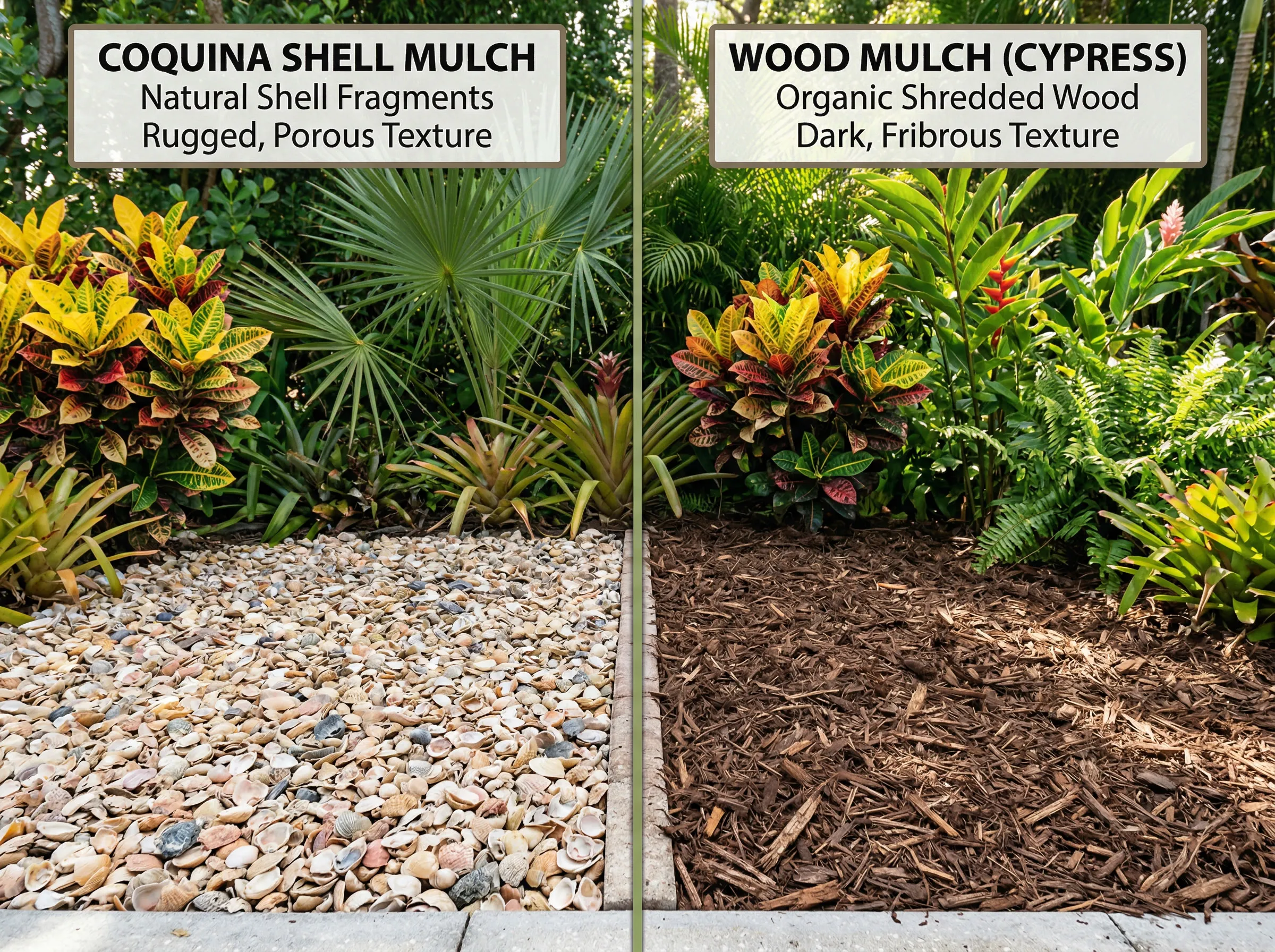
Coquina Shell vs. Mulch: What's Better for Florida Landscaping?
If you're deciding between coquina shell and mulch for your Florida yard, here's the short answer: coquina shell lasts far longer, drains better, and holds up against Florida's harsh weather, while mulch offers quick installation and immediate soil enrichment. For most permanent landscape beds in North Florida and the St. Augustine area, coquina shell is the smarter long-term investment. That said, the right choice depends on your specific goals, budget timeline, and what you're growing.
This guide breaks down every dimension of the comparison — cost over time, durability, pest resistance, drainage, aesthetics, environmental impact, and installation — so you can make an informed decision for your yard.
What Is Coquina Shell?
Coquina is a naturally occurring sedimentary rock made of compressed shells and shell fragments, historically quarried right here in St. Augustine. It's the same material used to build Castillo de San Marcos, the 17th-century Spanish fort that has stood for over 350 years — which tells you something about its durability. Today, coquina shell sold for landscaping is a crushed aggregate of small shell pieces that interlock when compacted, creating a firm, attractive ground cover.
Tropical Yards in St. Augustine supplies coquina shell at $145 per cubic yard, delivered via 14-ft dump trailer across the region from St. Augustine to Daytona Beach. Visit our coquina shell page for full coverage and pricing details, or contact us to schedule a delivery.
What Is Landscape Mulch?
Mulch refers to any organic material — wood chips, pine bark, pine straw, eucalyptus, or cypress — spread over soil to suppress weeds, retain moisture, and regulate soil temperature. Mulch is widely available, easy to spread, and biodegrades over time to enrich the soil. Most standard wood mulches in Florida retail between $40 and $70 per cubic yard, and a typical landscape bed requires refreshing every 12–18 months as the material breaks down.
Cost Analysis: 1, 3, 5, and 10 Years
The upfront cost of mulch looks attractive, but the total cost of ownership favors coquina shell significantly over time. Here's a practical breakdown for a 300-square-foot bed at 3 inches of coverage depth (approximately 2.8 cubic yards needed):
- Mulch Year 1: ~$150–$200 in material, plus 2–3 hours of labor for application.
- Mulch Year 3: Two to three re-applications = $300–$600 total spent, plus ongoing labor.
- Mulch Year 5: Four to five re-applications = $600–$1,000+ and significant cumulative time.
- Mulch Year 10: Eight to ten applications = $1,200–$2,000+ in material alone.
- Coquina Shell Year 1: ~$365 at $145/yard for 2.8 yards — one-time installation.
- Coquina Shell Year 3: Zero additional cost. Minimal top-off if needed after heavy rain.
- Coquina Shell Year 5: Possibly a small top-off of 0.5 yards (~$65). Total: ~$430.
- Coquina Shell Year 10: One to two modest top-offs. Total spend: $430–$600.
Over a decade, coquina shell saves the average homeowner $600 to $1,400 compared to mulch — not counting the labor savings from not reapplying every year. For commercial properties or larger landscapes, the savings multiply accordingly.
Florida Weather Durability: Hurricanes, Rain, and UV
Florida's weather is relentless. Summer brings torrential afternoon rains, hurricane-force winds, and intense UV radiation. Winter brings occasional hard freezes. Here's how each material performs:
Rain and Flooding
Mulch floats. After a heavy Florida downpour, you've likely seen mulch washed out of beds and piled against curbs or sidewalks. It requires raking back into place after every major rain event. Coquina shell, once compacted, does not float or wash away. Its interlocking texture keeps it in place even during heavy runoff. In fact, coquina's permeability helps water drain through rather than pool, which is critical in Florida's flat landscape.
Hurricanes and Wind
Lightweight mulch — especially pine straw — becomes airborne debris in hurricane-force winds. Heavier wood chips still scatter significantly in tropical storms. Coquina shell, being a dense aggregate, stays put. This is not a trivial consideration for homeowners in St. Johns, Flagler, and Volusia counties who deal with storm season every year.
UV Degradation
Florida's intense sun fades and breaks down wood mulch rapidly. Most dyed mulches lose their color within one season. Coquina shell's natural cream and beige tones are UV-stable — the shell does not fade or degrade from sun exposure. The appearance you install on day one is close to the appearance you'll have five years later.
Pest Resistance
This is where coquina shell has a decisive advantage for Florida homeowners. Termites, carpenter ants, and fungus gnats are all attracted to moist, decomposing wood mulch. In a state where subterranean termites cause billions of dollars in damage annually, placing fresh wood mulch directly against your home's foundation is a genuine risk. Pest control professionals in Florida frequently advise homeowners to maintain a 6-inch gap between wood mulch and the foundation — advice that is routinely ignored.
Coquina shell offers nothing for termites or ants to eat or nest in. It does not retain moisture the way wood mulch does. The drainage properties of shell reduce the damp conditions that attract and sustain pest colonies. For homes in older St. Augustine neighborhoods or coastal areas with existing termite pressure, switching from mulch to coquina shell in foundation beds is a meaningful risk-reduction step.
Fungus gnats and other moisture-loving insects are also dramatically reduced in coquina shell beds, since the surface dries quickly after watering. This matters especially for gardeners who keep potted plants or raised beds nearby.
Drainage and Compaction Properties
Florida soil — particularly the sandy loam common around St. Augustine and the clay-heavy soils inland — can have poor drainage in certain conditions. Mulch helps retain moisture, which is good for drought conditions but can contribute to root rot and fungal issues during wet seasons. Coquina shell allows water to percolate through freely while still providing a protective ground cover. This makes it ideal for tropical plant beds in St. Augustine where plants like palms, hibiscus, and bougainvillea require good drainage to thrive.
Over time, coquina shell does compact somewhat — a feature, not a bug, in pathways and high-traffic areas. This compaction makes it excellent for driveways, garden paths, and around pool decks. Mulch, by contrast, compresses into a dense mat that can actually impede drainage and air circulation to roots if not replaced regularly.
Aesthetic Differences Over Time
Fresh wood mulch looks beautiful — rich, dark, and uniform. But that appearance lasts a season at best. Within 3–6 months under Florida's sun and rain, most wood mulch fades to a grayish-brown, breaks down into a thin layer, and begins to look unkempt. Weeds push through the degraded mulch readily.
Coquina shell has a warm, natural coastal aesthetic that complements Florida's landscape beautifully. Its cream, tan, and rust tones pair exceptionally well with tropical plants, native grasses, and the historic architecture common in St. Augustine. Importantly, it maintains its appearance year after year. Weeds are far less successful pushing through a properly installed shell bed, and the ones that do appear are easy to spot and remove against the light-colored background.
Environmental Impact
Mulch has a meaningful environmental benefit: it decomposes into organic matter that feeds soil microbes and improves soil structure over time. This is genuinely valuable in nutrient-poor Florida soils. However, the repeated trucking, processing, and reapplication of mulch has a cumulative carbon footprint that is rarely considered.
Coquina shell is a natural, minimally processed material. When sourced responsibly from existing deposits (rather than live habitat), it has a low environmental impact. It doesn't require chemical dyes or preservatives, doesn't decompose into runoff, and doesn't need to be replaced frequently. For sustainable landscaping goals, coquina shell's longevity makes its per-year environmental cost competitive with — or better than — annually replaced mulch.
Installation Guide
Installing coquina shell correctly ensures long-term performance and minimal maintenance. Follow these steps:
- Prepare the area: Remove existing weeds, mulch, or grass. Till or loosen the top 2 inches of soil if compaction is a concern.
- Install landscape fabric: Use a high-quality, permeable weed barrier fabric. Overlap seams by at least 6 inches and secure edges with landscape staples. This step is important — without it, weeds will push up through the shell over time.
- Install edging: Use metal, concrete, or composite edging to contain the shell and prevent it from spreading into lawn areas.
- Apply coquina shell: Spread 2–3 inches deep for weed suppression and appearance. Use a rake to distribute evenly.
- Compact lightly: For walkways and paths, use a hand tamper or roller to compact the surface. For garden beds, light compaction from foot traffic is sufficient.
- Top off as needed: Every few years, add a thin layer (0.5–1 inch) to replenish material that has settled or migrated.
Need delivery? Tropical Yards delivers coquina shell via 14-ft dump trailer from St. Augustine to Daytona Beach. See our delivery area or call 772-267-1611 to schedule.
Which Applications Use Which Material?
Neither material is universally better for every application. Here's a practical guide:
- Use coquina shell for: Foundation beds near your home (termite risk reduction), driveways and paths, pool deck surrounds, areas prone to wash-out, beds you want to look good year-round without re-mulching, coastal Ponte Vedra landscapes, and Palm Coast tropical yards.
- Use mulch for: Vegetable and herb gardens (where soil enrichment is a priority), new tree and shrub plantings (where moisture retention aids establishment), and temporary seasonal displays where appearance matters more than longevity.
- Use both: Some homeowners use coquina shell in high-visibility front beds and along foundations, while using mulch in backyard vegetable gardens and around newly planted trees. This hybrid approach gets the best of both materials.
Coverage Calculator
To estimate how much coquina shell you need, use this simple formula:
Square footage × depth in inches ÷ 324 = cubic yards needed
For example: a 400 sq ft bed at 3 inches depth = 400 × 3 ÷ 324 = 3.7 cubic yards. At $145/yard, that's approximately $481 for a permanent installation that won't need replacing for years. Contact us to discuss your project size and schedule delivery.
Frequently Asked Questions
How long does coquina shell last compared to mulch?
Coquina shell lasts indefinitely with only occasional top-offs needed every few years. Standard wood mulch in Florida typically requires replacement every 12–18 months as it decomposes under heat and humidity.
Does coquina shell get hot in summer?
Light-colored coquina shell reflects sunlight rather than absorbing it, keeping surface temperatures cooler than dark mulch or black rubber mulch. This is a genuine advantage in Florida summers and helps protect shallow plant roots.
Will coquina shell hurt my plants?
Coquina shell is slightly alkaline and can raise soil pH slightly over time. Florida's naturally acidic soils often benefit from this, but plants that require acidic conditions (such as blueberries or gardenias) may need pH monitoring. Most tropical plants, palms, and ornamentals grow well in coquina-mulched beds.
Is coquina shell good for driveways?
Yes. Coquina shell is one of the most popular driveway materials in coastal Florida communities. It compacts firmly under vehicle traffic, provides excellent drainage, and has an attractive natural appearance. It's commonly used in historic St. Augustine neighborhoods where permeable, natural surfaces are preferred.
How deep should I apply coquina shell?
For landscape beds, 2–3 inches is ideal. For driveways and paths, 4–6 inches provides a stable surface. Applying too shallow reduces weed suppression; going much deeper is unnecessary and adds cost without benefit.
Where can I buy coquina shell near St. Augustine?
Tropical Yards in St. Augustine supplies coquina shell at $145 per cubic yard with delivery from St. Augustine to Daytona Beach. Visit our coquina shell page or call 772-267-1611 to order.
Ready to Transform Your Yard?
Get the lowest prices on tropical plants and coquina shell in Northeast Florida.