2026-03-25
Coquina Shell Driveways in St Augustine FL: Cost, Installation, and Benefits
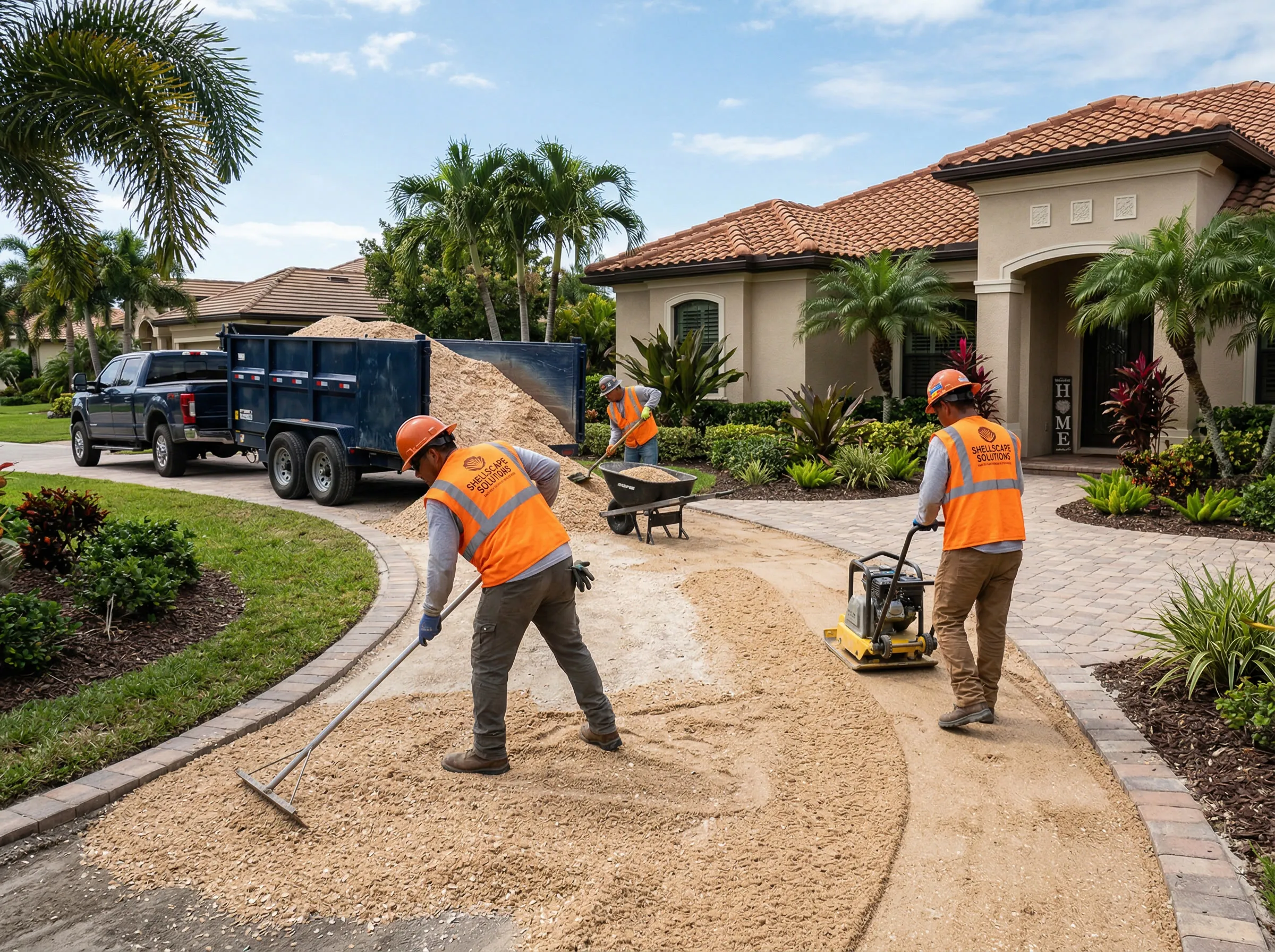
Coquina shell driveways in St. Augustine, Florida typically cost about $5–$10 per square foot installed (depending on your site prep, base thickness, and whether you DIY or hire a contractor). Coquina itself is often ordered by the cubic yard—Tropical Yards sells Coquina Shell for $145/yard—and most new shell driveways are built with a compacted base plus a 3–4 inch coquina shell surface layer for stability and drainage. Installation is straightforward (excavate, grade, fabric, base rock, coquina in compacted lifts), and the top benefits for St. Augustine homeowners are excellent drainage in heavy rain, a cooler/light surface, a classic coastal look, and easy long-term maintenance as long as you plan for periodic top-offs.
Why coquina shell is a St. Augustine driveway classic
If you live in St. Augustine, you’re surrounded by coquina history. The same shell-based stone that helped define the region’s architecture and fortifications makes a practical, attractive driveway surface today. A coquina shell driveway looks “right” in older neighborhoods and coastal communities, and it performs well in our climate where sudden downpours, sandy soils, and salt air can punish more rigid driveway materials.
Coquina shell is essentially crushed and graded shell/limestone material that compacts into a stable surface while staying porous enough to let rainwater soak through rather than pool. That drainage advantage is one reason crushed coquina is widely recommended for driveway applications at 3–4 inches installed depth with compaction in lifts ([Hello Gravel](https://hellogravel.com/crushed-coquina-sand-complete-guide-uses-cost-installation/)).
Where coquina shell driveways make the most sense in St. Augustine
Coquina driveways are popular anywhere you want a natural coastal look and better drainage than concrete or asphalt—especially on properties that sit a bit low, get runoff from the street, or deal with seasonal standing water.
- Historic neighborhoods: Lincolnville, Uptown, and areas near the Plaza de la Constitución where owners often want a softer, period-friendly look.
- Water-adjacent areas: Davis Shores, Anastasia Island, and Vilano Beach where permeability and salt-tolerant landscaping matter.
- Tree-canopy streets: Routes like Magnolia Avenue and older pockets off San Marco Avenue where roots and shade can make rigid surfaces crack or stain.
- Busy corridors and side streets: Homes near Ponce de Leon Blvd (US-1) often want a surface that stays tidy after storms and doesn’t trap puddles at the apron.
It’s also a strong fit for vacation rentals where you want curb appeal fast, a driveway that photographs well, and a surface that can be refreshed in a morning with a top-dress.
Key benefits of coquina shell driveways (especially in Northeast Florida)
1) Better drainage during St. Augustine’s heavy rains
One of the biggest reasons locals choose shell is water behavior. Coquina compacts into a stable surface while maintaining porosity—so rainwater filters down rather than collecting in low spots ([Hello Gravel](https://hellogravel.com/crushed-coquina-sand-complete-guide-uses-cost-installation/)). In practice, that means fewer puddles, less slick algae buildup than shaded concrete, and less runoff pushing sand into your garage or landscape beds.
2) A cooler, brighter surface than asphalt
Shell surfaces are light-colored, which helps reflect heat. That can matter on sunny lots in communities like St. Augustine Shores and newer neighborhoods west of I-95 where driveways can bake all afternoon. A cooler surface is also nicer if you walk pets barefoot across the drive.
3) Coastal curb appeal that fits the city’s character
Coquina’s color palette—creams, tans, and warm shell tones—pairs naturally with coastal architecture, tabby accents, and tropical plantings. It also complements St. Augustine’s historic identity in a way plain gray concrete often doesn’t.
4) Easy maintenance and refresh cycles
When installed correctly, a coquina driveway can be very low maintenance: occasional raking, keeping the edges clean, and topping off thin spots. Guidance for shell driveways commonly recommends keeping extra shell on hand and replenishing low areas over time ([This Old House](https://www.thisoldhouse.com/driveways/how-to-install-a-seashell-driveway)).
5) Permeable surface can reduce runoff stress on landscaping
Permeability helps protect adjacent beds from washouts and can reduce the “river effect” that happens when an impermeable driveway concentrates runoff into one channel. If you’ve ever watched water sheet off a slab during a summer downpour, you know why this matters.
Coquina shell driveway cost in St. Augustine FL
Let’s break cost into the two categories homeowners care about: material cost and installed cost.
Material price: Tropical Yards coquina shell at $145/yard
Tropical Yards sells Coquina Shell at $145 per cubic yard. A common planning rule for shell driveways is that 1 cubic yard covers about 100 square feet at roughly 3 inches deep (many installers target ~3 inches for new shell surfaces), and crushed coquina driveway installations are commonly specified at 3–4 inches total depth ([This Old House](https://www.thisoldhouse.com/driveways/how-to-install-a-seashell-driveway); [Hello Gravel](https://hellogravel.com/crushed-coquina-sand-complete-guide-uses-cost-installation/)).
Delivery fees (dump trailer) from St. Augustine to Daytona Beach
Tropical Yards delivers coquina shell by dump trailer across St. Johns, Flagler, and Volusia counties. Current delivery fees:
- St. Augustine: $250
- Ponte Vedra: $275
- Palm Coast: $300
- Flagler Beach: $300
- Ormond Beach: $350
- Daytona Beach: $375
For help planning a load size and delivery window, use the delivery page or call 772-267-1611.
Installed cost per square foot (what most homeowners budget)
Installed cost typically lands around $5–$10 per square foot when you account for excavation, grading, fabric, base rock, coquina, and compaction. Your final number depends most on:
- How much excavation is required (sandy fill vs. clay, old concrete removal, etc.)
- Whether you need a thicker base (soft subgrade, poor drainage, heavy vehicles)
- Edging design (steel edging, coquina border, pavers, plant border)
- Access constraints (tight Uptown lots vs. wide newer driveways)
As a point of comparison, general Saint Augustine driveway pricing references show typical installed costs for other driveway types—such as asphalt, concrete, and pavers—often higher than loose aggregate options ([ProMatcher](https://driveways.promatcher.com/cost/saint-augustine-fl-driveways-costs-prices.aspx)).
Quick cost table (example budgets)
| Driveway size | Typical coquina depth | Estimated coquina quantity | Coquina material cost (at $145/yd) |
|---|---|---|---|
| 300 sq ft (small) | 3 in surface | ~3 yards | ~$435 |
| 500 sq ft (average) | 3–4 in surface | ~5–7 yards | ~$725–$1,015 |
| 900 sq ft (large) | 3–4 in surface | ~9–13 yards | ~$1,305–$1,885 |
Important: The table above is a planning estimate for surface shell only. Most projects also use base rock and fabric, and your contractor may recommend additional thickness in soft areas or where vehicles turn sharply.
Coquina shell driveway installation (St. Augustine-proven steps)
Shell driveways are not complicated, but they do require correct depth, drainage pitch, and compaction. Here’s a practical process that works well in St. Augustine’s sandy soils and storm cycles.
Step 1: Layout, measure, and plan your thickness
Mark the driveway footprint and measure length and width. For new shell driveways, a common rule is a 3-inch shell layer; for refreshing an existing shell driveway, 1 inch may be enough ([This Old House](https://www.thisoldhouse.com/driveways/how-to-install-a-seashell-driveway)).
Step 2: Excavate and grade for drainage
Excavate and grade so water drains away from structures and doesn’t pond at the garage. Crushed coquina driveway guidance often recommends excavating around 3–4 inches for the coquina layer itself, plus additional depth for base materials depending on site conditions ([Hello Gravel](https://hellogravel.com/crushed-coquina-sand-complete-guide-uses-cost-installation/)).
Step 3: Install fabric (weed control + base separation)
Install landscape fabric/geotextile over the subgrade. This helps prevent weeds while also separating your base from the native sandy soil, reducing mixing and “sink-in” over time. Coquina installation guidance commonly includes fabric as a standard step ([Hello Gravel](https://hellogravel.com/crushed-coquina-sand-complete-guide-uses-cost-installation/)).
Step 4: Build a stable base (especially for vehicle loads)
If you are building a new driveway footprint, you’ll typically install a compacted base layer (often crushed stone) before shell. One shell driveway installation approach describes filling a trench with ¾-inch crushed stone as a base component before placing shells ([This Old House](https://www.thisoldhouse.com/driveways/how-to-install-a-seashell-driveway)).
Step 5: Install coquina in lifts and compact
For durability, install coquina in thin lifts and compact each lift with a plate compactor. Crushed coquina driveway guidance recommends applying material in 2-inch lifts and compacting each layer, targeting a total driveway depth of 3–4 inches for the coquina layer ([Hello Gravel](https://hellogravel.com/crushed-coquina-sand-complete-guide-uses-cost-installation/)).
Step 6: Edge control (the difference between “rustic” and “messy”)
Edge control is what keeps shell driveways looking clean. Options include:
- Steel edging for a crisp modern line
- Coquina boulders or cut stone borders for a coastal look
- Hardy plant borders that hold shell in place (ideal for wider lots)
For a living edge, Tropical Yards carries standout border plants such as Clusia ($21.99), Muhly Grass ($24.99), and Macho Fern ($17.99) that look natural along shell and help “soften” the perimeter.
Design ideas: pairing coquina shell with Tropical Yards plants
A coquina driveway can be the start of a full coastal landscape design—especially in St. Augustine where tropical textures look right year-round. Tropical Yards stocks 125+ varieties of tropical plants and can help you plan a driveway-and-entry look that feels intentional (not just “shell dumped on sand”).
Entry palms that frame the driveway
- Cat Palm — $25.99
- Majesty Palm — $25.99
Use palms to frame the driveway entry near the street apron or mailbox, especially in communities like Palencia or newer US-1 North neighborhoods where front setbacks are larger and you need vertical structure.
Flowering color that pops against shell
- Hibiscus — from $26.99
- Bougainvillea — from $26.99
Hibiscus and bougainvillea love the bright, coastal vibe and make shell look even lighter and cleaner. If you’re in Davis Shores or closer to Anastasia Island beaches, these also help reinforce the “historic coastal garden” feel.
Evergreen structure along the edges
- Clusia — $21.99
Clusia is a go-to for neat hedging and driveway definition—perfect when you want your shell to stay contained while still keeping a tropical, natural look.
Maintenance: how to keep a coquina shell driveway looking sharp
A well-built coquina driveway is forgiving, but it will look best with a simple maintenance routine.
- Rake and groom: Light raking keeps tire ruts and foot traffic from creating uneven areas.
- Top off low spots: Keep extra shell on hand; filling low areas is a standard recommendation for shell driveways ([This Old House](https://www.thisoldhouse.com/driveways/how-to-install-a-seashell-driveway)).
- Annual refresh: Many homeowners add a thin top-dress layer periodically, especially after rainy seasons.
- Edge control: Re-seat edging stones or trim borders so shell stays where you want it.
Coquina shell vs. concrete, asphalt, and pavers in St. Augustine
Every driveway material has tradeoffs. Here’s the local-practical comparison:
- Coquina shell: Permeable, coastal look, easy refresh, strong drainage. Needs occasional top-off and good edging.
- Concrete: Clean and hard, but can crack/stain and is impermeable (runoff issues). Often higher installed cost than shell alternatives ([ProMatcher](https://driveways.promatcher.com/cost/saint-augustine-fl-driveways-costs-prices.aspx)).
- Asphalt: Lower upfront cost than pavers but runs hot, can soften, and needs sealing; not as bright/coastal.
- Pavers: Premium look and long life, but typically a higher installed price and more labor-intensive.
If your priority is drainage, coastal character, and a surface you can refresh without major demolition, coquina shell is one of the best fits for St. Augustine.
Get coquina shell delivered in St. Augustine (and nearby coastal towns)
Tropical Yards supplies coquina shell and tropical plants across the Historic Coast with dump trailer delivery from St. Augustine to Daytona Beach. If you’re building in St. Augustine proper—or planning a project in Ponte Vedra, Palm Coast, Flagler Beach, Ormond Beach, or Daytona Beach—use these local pages for area-specific details:
- Coquina Shell
- Coquina Shell St. Augustine
- Coquina Shell Ponte Vedra
- Coquina Shell Palm Coast
- Coquina Shell Flagler Beach
- Coquina Shell Ormond Beach
- Coquina Shell Daytona Beach
If you’re also landscaping the entry, explore Tropical Yards’ plant selections for each market:
Ready to order? Call 772-267-1611 or use the contact page and tell the team your driveway size (length × width), whether it’s a new build or a refresh, and your delivery city.
FAQ: Coquina shell driveways in St. Augustine, FL
1) How much coquina shell do I need for a St. Augustine driveway?
A common planning rule is about 1 cubic yard per ~100 square feet at ~3 inches depth, and new shell driveways often target a 3–4 inch coquina layer depending on traffic and soil conditions ([This Old House](https://www.thisoldhouse.com/driveways/how-to-install-a-seashell-driveway); [Hello Gravel](https://hellogravel.com/crushed-coquina-sand-complete-guide-uses-cost-installation/)). Measure your driveway (length × width) and plan thickness; Tropical Yards can help you estimate yards for your project.
2) Will a coquina shell driveway wash away in St. Augustine storms?
When installed with proper grading, fabric, a compacted base, and good edging, coquina compacts into a stable surface and stays in place well. Most “washout” problems come from poor edge control or low areas where stormwater concentrates. Keeping extra shell to fill low spots is a common best practice ([This Old House](https://www.thisoldhouse.com/driveways/how-to-install-a-seashell-driveway)).
3) Is coquina shell good for driveways near the Intracoastal or salt air (Vilano Beach/Davis Shores)?
Yes—coquina’s coastal origin and permeability make it a strong fit in salt-air environments. Pair it with salt-tolerant tropical landscaping and ensure your driveway pitch moves water away from structures.
4) Do I need permits for a coquina shell driveway in the City of St. Augustine?
Rules vary based on whether you’re changing the driveway apron, expanding width, or working in a historic district. If you’re in Lincolnville or near the Historic Downtown core, it’s smart to check with the City or your HOA for site-specific requirements before construction.
5) What’s the best way to make a coquina driveway look “high-end” in St. Augustine?
Use crisp edging, install coquina in compacted lifts, and frame the entry with intentional plantings—like Cat Palms and flowering hibiscus or bougainvillea. A clean border and a defined driveway shape will make shell look like a designed feature rather than a quick fill.
Ready to Transform Your Yard?
Get the lowest prices on tropical plants and coquina shell in Northeast Florida.