2026-04-05
Best Palm Trees for Northeast Florida Yards
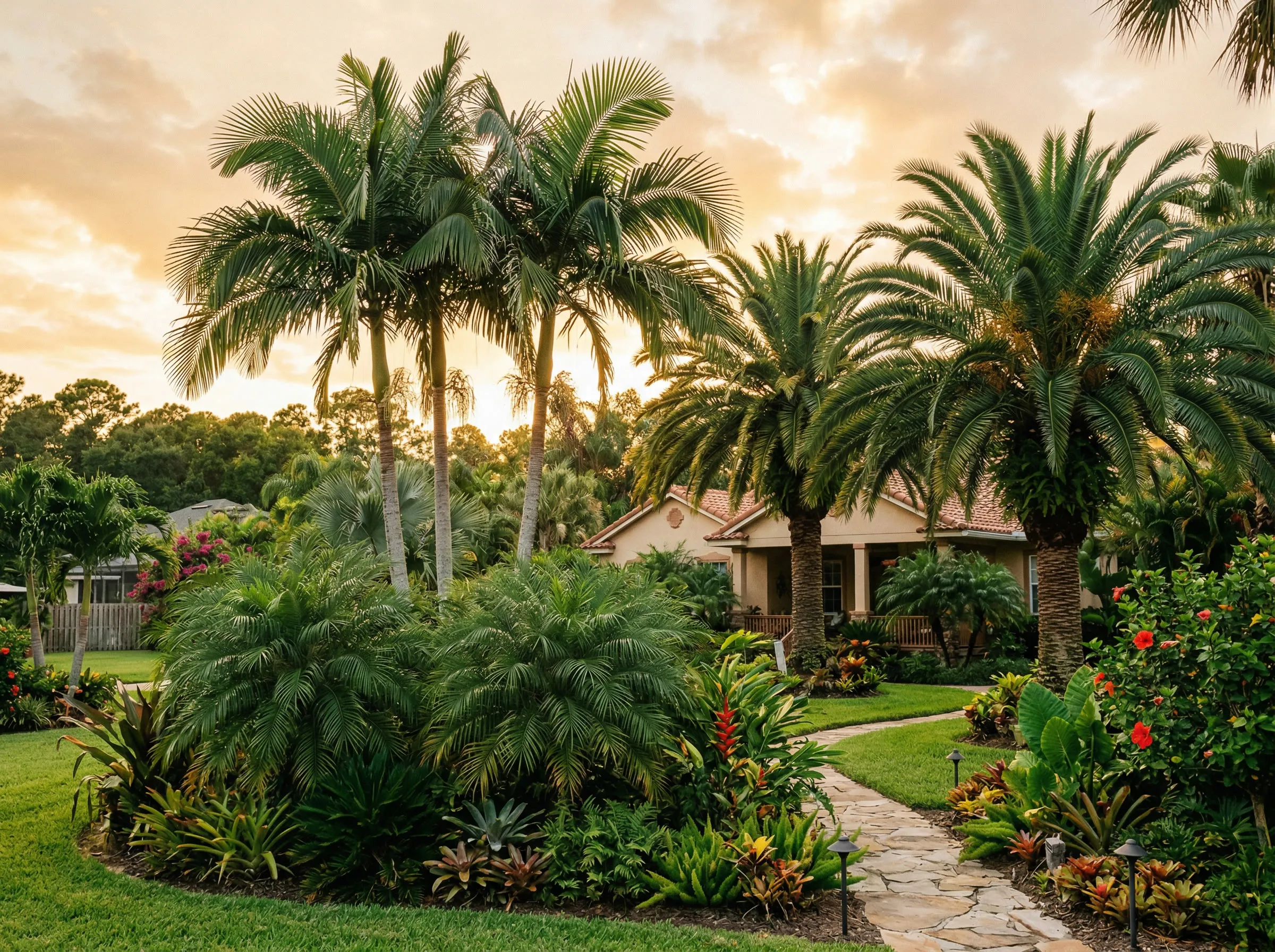
Best Palm Trees for Northeast Florida Yards
Northeast Florida sits in USDA Hardiness Zones 8B to 9B, a climate that's warm enough for a wide range of palms but cold enough that variety selection matters. The right palm will thrive for decades with minimal care; the wrong one can be killed by a single hard freeze. This guide covers the best-performing palm species for yards from St. Augustine to Jacksonville to Palm Coast, with detailed information on mature size, growth rate, cold tolerance, placement, planting instructions, seasonal care, and common disease issues.
Looking to add palms to your yard? Browse our full palm tree selection at Tropical Yards, St. Augustine, or call 772-267-1611 to discuss delivery to your area.
Why Palm Selection Matters in Northeast Florida
St. Augustine, Ponte Vedra, and Palm Coast are in a transition zone where true tropical palms meet cold-hardy species. A Coconut Palm that thrives in Miami will die in a St. Augustine winter. A Queen Palm that handles South Florida summers can suffer freeze damage in our Zone 9A winters. Choosing species proven in northeast Florida saves money, prevents heartbreak, and produces a landscape that looks lush year-round rather than frost-burned every January.
Top Palm Varieties for Northeast Florida
1. Sabal Palm (Sabal palmetto) — Florida's State Tree
The Sabal Palm is the gold standard for northeast Florida landscapes. As Florida's official state tree, it's the most cold-hardy and drought-tolerant palm you can plant here, surviving temperatures down to 15°F with no damage. Mature Sabal Palms reach 40–60 feet tall with a 10–15 foot canopy spread, making them ideal for open lawn areas, street edges, and large properties where vertical interest is needed. Growth rate is moderate — about 1–2 feet per year once established. Sabal Palms are nearly impossible to kill once rooted and require virtually zero maintenance beyond occasional frond removal. They handle saltwater spray, poor sandy soils, and prolonged drought without complaint. For any homeowner who wants a true Florida look without maintenance concern, the Sabal Palm is the top recommendation.
2. Windmill Palm (Trachycarpus fortunei)
The Windmill Palm is the best choice for homeowners who love the tropical look but want maximum cold hardiness. It tolerates temperatures down to 5–10°F — colder than any other ornamental palm on this list — making it reliable even in the coldest northeast Florida winters. Windmill Palms are slower growing than most palms, reaching 10–20 feet at maturity, with a slender trunk covered in distinctive dark fiber and elegant fan-shaped fronds. Their compact size makes them perfect for smaller yards, courtyard plantings, entryways, and pool areas. They actually perform better in partial shade during Florida summers, unlike most palms that crave full sun. Plant them in well-drained soil with some afternoon shade protection during establishment. A beautiful specimen plant that rewards patience — and repays it with decades of trouble-free growth.
3. Sylvester Date Palm (Phoenix sylvestris)
Few palms make as dramatic an architectural statement as the Sylvester Date Palm. Its thick, patterned diamond-textured trunk and massive crown of arching blue-green fronds give any yard an instant resort quality. Sylvester Palms reach 20–30 feet at maturity and handle cold down to about 20°F, making them well-suited for our Zone 9 climate. Growth rate is slow to moderate — 1 foot per year is typical. These are high-impact specimen trees best planted as focal points in open areas where their full silhouette can be appreciated. They're salt-tolerant and drought-tolerant once established, though they benefit from regular fertilization to maintain that deep blue-green color. Avoid planting near foot traffic areas as the frond bases have sharp spines.
4. Pindo Palm / Jelly Palm (Butia capitata)
The Pindo Palm is one of the hardiest feather-leaved palms available, tolerating temperatures down to 10–15°F. It's a compact, slow-growing palm reaching 15–20 feet at maturity with graceful, arching blue-gray fronds that give it a uniquely soft, tropical appearance. Pindo Palms produce edible yellow-orange fruits in summer (hence "Jelly Palm" — the fruit makes excellent jelly), adding ornamental and functional value. They thrive in full sun and well-drained soil and handle drought well once established. The Pindo's low maintenance requirements, cold tolerance, and beautiful foliage color make it one of the most underused but highly rewarding palms in northeast Florida landscapes. Plant as an accent in mixed tropical beds or as a standalone specimen near patios and pool decks.
5. Pygmy Date Palm (Phoenix roebelenii)
For smaller spaces, container planting, or understory use, the Pygmy Date Palm is unmatched in elegance. It grows slowly to just 6–10 feet tall with graceful, arching fine-textured fronds that have a distinctly tropical appearance. Cold tolerance extends down to about 28°F, so it's more vulnerable than larger species and benefits from placement near structures that provide some frost protection. Pygmy Date Palms are popular flanking entryways, as poolside accents, and in large containers on patios and screened lanais. They prefer moist, well-drained soil and partial to full sun. A single specimen or a grouping of three creates a lush, layered look at the base of larger trees. See our St. Augustine tropical plants page for availability.
6. European Fan Palm (Chamaerops humilis)
The European Fan Palm is a multi-trunk clumping palm that reaches 8–15 feet tall and wide, making it as much a large shrub as a traditional tree. Its cold tolerance is exceptional — surviving temperatures down to 10°F — and it thrives in Florida's sandy soils without much attention. The dense, spiny fan-shaped fronds create an impenetrable, wildlife-friendly hedge when planted in masses. This palm works beautifully as a large specimen shrub, a privacy screen, or an anchor plant in mixed tropical borders alongside bougainvillea, ornamental grasses, and flowering plants. Growth rate is very slow, so purchase the largest specimen you can afford.
7. Queen Palm (Syagrus romanzoffiana)
Queen Palms are among the fastest-growing palms available — up to 3 feet per year under good conditions — and reach 25–50 feet at maturity with a graceful, feathery canopy of long arching fronds. They have a sleek, smooth ringed trunk and produce clusters of ornamental orange fruit. The tradeoff for their speed and beauty is cold sensitivity: Queen Palms are damaged below 25°F and can be killed in severe freezes. In Zone 9B (coastal areas near St. Augustine and Ponte Vedra), they perform reliably most years. In Zone 9A or inland locations, choose a more cold-hardy species or be prepared to provide frost protection. When Queen Palms thrive, they transform a yard quickly — a 10-foot specimen can be a 20-foot statement tree within a few years. Fertilize aggressively with a palm-specific fertilizer high in potassium and manganese to prevent nutritional deficiencies.
Detailed Planting Instructions
Planting palms correctly is critical to establishment success, especially given Florida's hot, dry summers that follow most planting seasons.
- Timing: Plant palms in spring (April–May) when soil is warm but before peak summer heat. Avoid planting in fall or winter as cold soil slows root establishment.
- Hole preparation: Dig a hole twice as wide as the root ball and the same depth. Never plant deeper than the original soil line — burying the trunk base invites rot and disease.
- Soil amendment: Florida's sandy soil drains well but is nutrient-poor. Backfill with a 50/50 mix of native soil and quality topsoil. Do not add excessive organic matter for palms — they prefer lean, well-drained conditions.
- Trunk staking: Stake newly transplanted palms for the first 6–12 months. Use wide strapping (not wire) around the trunk at 2–3 points and secure to stakes set at 45-degree angles outside the root ball. Remove stakes after one year to prevent trunk damage.
- Watering: Water deeply every day for the first 2 weeks, then every other day for 2 months, then transition to a standard irrigation schedule. Palms can go weeks without water once fully established but need consistent moisture in the first growing season.
- Fertilization at planting: Apply a slow-release palm fertilizer (8-2-12 with micronutrients) in the planting hole and broadcast around the root zone. Do not apply standard lawn fertilizer — high-nitrogen products without potassium cause serious palm deficiencies.
Seasonal Care Calendar
- January–February: Avoid pruning. Monitor for cold damage — do not remove fronds until you're certain they are fully dead. Freeze-damaged fronds protect the bud. Halt fertilization.
- March–April: Resume fertilization as soil warms. Prune any dead or severely damaged fronds from winter. This is the best time to plant new palms.
- May–June: Apply second fertilizer application. Monitor for ganoderma, lethal bronzing, and nutrient deficiencies. Increase irrigation frequency as temperatures rise.
- July–August: Peak growth season. Maintain irrigation. Watch for spider mites and palm weevils during hot, dry spells.
- September–October: Apply final fertilizer application of the year (no later than October 1). Begin reducing irrigation. Prepare cold-protection supplies.
- November–December: Cover tender palms when frost is forecast. Do not prune green fronds — leave them as a buffer against cold. Halt fertilization.
Fertilization Schedule
Palms have specific nutritional needs different from other landscape plants. The most common palm problems in northeast Florida — yellowing fronds, frizzle top, trunk constriction — are caused by nutritional deficiencies, not pests or disease. Use a palm-specific slow-release fertilizer with an 8-2-12 NPK ratio and high levels of magnesium, manganese, and iron. Broadcast 1–2 lbs per 100 square feet of root zone three times per year: spring (March), early summer (June), and late summer (September). Never fertilize within 60 days of an expected frost. Avoid high-nitrogen fertilizers, which produce lush but structurally weak growth prone to cold and wind damage.
Common Palm Diseases in Northeast Florida
Lethal Bronzing (LBD): A phytoplasma disease spread by plant hoppers. Symptoms include browning of oldest fronds, premature fruit drop, and eventual death of the entire palm. There is no cure — infected palms must be removed and destroyed. Sabal Palms and many Phoenix species are susceptible. There is no preventive spray, but maintaining healthy palms through proper nutrition helps resist infection.
Ganoderma Butt Rot: Caused by the fungus Ganoderma zonatum, which produces distinctive bracket-shaped "conks" on the lower trunk. The fungus destroys the interior of the trunk. There is no treatment — infected palms must be removed. Avoid wounding trunks and do not replant palms in the same location where an infected tree stood.
Fusarium Wilt: Primarily affects Canary Island Date Palms and their hybrids. Spread through contaminated pruning tools. Symptoms include one-sided frond die-off progressing upward. Always sterilize pruning tools with bleach solution between palms.
Landscape Design Tips with Palms
Palms are most effective in landscape design when used with intention rather than scattered randomly. Tall single-trunk palms like Sabal or Queen Palms work best in threes or clusters — odd numbers look more natural than pairs. Anchor mixed tropical beds with a large specimen palm, then layer in mid-height plants like hibiscus, mandevilla, and tropical hedging shrubs, with ornamental grasses and low groundcovers at the base. Consider pairing palms with coquina shell ground cover beneath for a cohesive, low-maintenance coastal aesthetic. For design inspiration, visit our tropical yard design guide.
Frequently Asked Questions
What is the most cold-hardy palm for northeast Florida?
The Windmill Palm (Trachycarpus fortunei) is the most cold-hardy ornamental palm, tolerating temperatures as low as 5°F. The Sabal Palm (Florida's state tree) is a close second, rated to 15°F and widely available across all northeast Florida zones.
How fast do palms grow in Florida?
Growth rates vary widely by species. Queen Palms grow up to 3 feet per year. Sabal Palms grow 1–2 feet per year once established. Windmill and Sylvester Palms grow 1 foot or less per year. Proper fertilization and irrigation significantly improve growth rates in all species.
How far apart should I plant palms?
For single-trunk palms, space 10–20 feet apart depending on mature canopy spread. Group plantings of 3 palms can be placed 4–6 feet apart for a clustered tropical effect. Avoid planting close to structures, power lines, or septic systems — check mature height and root zone spread before planting.
When should I trim palm fronds?
Only remove fronds that are completely brown and dead. Never remove green or yellow fronds — palms recycle nutrients from aging fronds back into the plant. Excessive pruning (called "hurricane cutting") stresses palms, makes them cold-sensitive, and produces an unattractive "telephone pole" appearance.
Can I buy palms in St. Augustine?
Yes. Tropical Yards in St. Augustine carries a wide selection of palm varieties suited for northeast Florida. We deliver via dump trailer from St. Augustine to Daytona Beach. Visit our palm trees page or call 772-267-1611 to ask about current stock and availability.
Ready to Transform Your Yard?
Get the lowest prices on tropical plants and coquina shell in Northeast Florida.